How to Clean Dog Ears at Home: Safe Home Remedies, DIY Cleaners & Mistakes to Avoid
Disclosure: some links below are affiliate links. If you buy through one we may earn a commission at no extra cost to you. It never changes what we recommend or how we rank it.
Cleaning a dog's ears is straightforward when the ear is healthy — and a good way to cause pain and damage when it is not. The most useful skill here is knowing when to stop and call a vet.
Do not clean the ear if you see any of these
Cleaning an already-inflamed or infected ear hurts, and pouring liquid into an ear with a ruptured eardrum can cause lasting damage — including deafness. Book a vet appointment instead if there is:
- Pain — flinching, yelping, or refusing to let you near the ear.
- A strong or yeasty smell.
- Dark brown, black, yellow or green discharge, or anything that looks like coffee grounds.
- Redness, swelling, heat, or a thickened, leathery canal.
- Blood, scabs or raw skin.
- Head tilt, circling, loss of balance, or flicking eye movements — these suggest the middle or inner ear and are urgent.
- Constant head shaking or scratching, or a soft swollen ear flap (a haematoma).
You cannot see the eardrum without an otoscope, which is precisely why a vet checks it before prescribing anything that goes into the canal.
How often should you clean?
Only as often as the ear actually needs it. A healthy dog with upright ears may never need cleaning at all — the ear is self-cleaning, and over-washing strips its natural defenses and causes the very irritation you were trying to prevent.
More regular attention tends to suit dogs with floppy ears, dogs that swim, dogs with allergies, and breeds with hairy or narrow canals. Once every few weeks is plenty for most; weekly is a lot. If your dog needs cleaning more often than that to stay comfortable, the underlying cause needs diagnosing rather than managing.
What you need
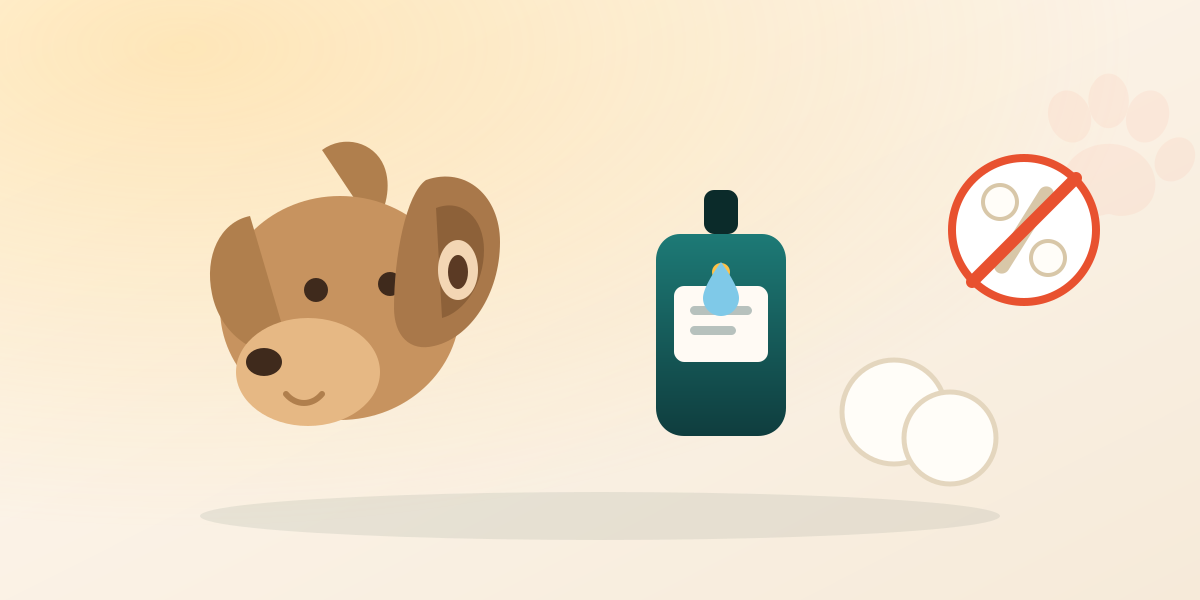
- A veterinary ear cleaner. These are pH-balanced for a dog's canal, and often contain drying agents that plain liquids do not.
- Cotton balls or gauze. Never cotton swabs inside the canal.
- A towel, because your dog will shake.
- Treats. Ear cleaning becomes far harder for the rest of the dog's life if the first experience is unpleasant.
Step by step
- Settle your dog somewhere easy to clean up. Sit alongside rather than looming over them.
- Lift the ear flap gently to open the canal.
- Fill the canal with cleaner until it is nearly full. Do not let the nozzle touch the ear — that contaminates the bottle.
- Massage the base of the ear for twenty to thirty seconds. You should hear a squelch; that is the solution breaking up debris deep in an L-shaped canal your fingers can never reach.
- Let your dog shake. This is the part that brings debris up. Stand back.
- Wipe the visible parts only — the flap and the entrance — with cotton or gauze wrapped around a finger. Go no deeper than your finger comfortably reaches.
- Repeat on the other side, and finish with a treat.
If what comes out is heavily discolored, or your dog is clearly uncomfortable, stop and book an appointment.
DIY ear cleaners: an honest assessment
Vinegar and water
The most commonly recommended homemade cleaner, usually a 50/50 dilution of white vinegar or apple cider vinegar with water. It is acidic, which is unfriendly to yeast — and that same acidity stings badly on any broken or ulcerated skin, which is common in exactly the ears people want to treat. It also carries no protection if the eardrum is perforated. Not a first choice, and not something to use on an ear that is already sore.
Hydrogen peroxide
No. It irritates and macerates the delicate canal lining, leaves moisture behind, and can make an infection worse rather than better. This is one of the most common well-meant mistakes.
Rubbing alcohol
No. It burns on inflamed or broken skin, and dries the canal excessively.
Olive oil, coconut oil
Oils soften wax but leave a residue that traps moisture and debris — the opposite of what you want in a warm, humid canal. They also make it harder for a vet to assess the ear afterwards.
Witch hazel, tea and herbal rinses
Little evidence, variable ingredients, and the alcohol content of some witch hazel preparations stings. Avoid essential oils in ears altogether; tea tree oil in particular is toxic to dogs.
The short version: a bottle of veterinary ear cleaner costs about the same as a takeaway coffee and is formulated for the job. There is very little to gain by improvising.
Never use cotton swabs in the canal
A dog's ear canal turns a corner. A cotton swab pushes debris around that corner and packs it against the eardrum, which is how a mild wax problem becomes a genuine infection. Swabs are fine for the folds of the outer ear flap where you can see what you are doing, and nowhere else.
Normal wax, or a problem?
A small amount of pale yellow or light brown wax with no smell is normal. Cause for concern is dark, crumbly, black debris; a heavy yeasty or sour odor; a wet-looking canal; and any pain.
Recurrent ear problems are usually a symptom rather than the disease. Allergies are the most common underlying cause in dogs whose ears keep flaring, followed by ear mites in puppies, foreign material such as grass seeds, moisture from swimming, and occasionally hormonal conditions. Treating the ear alone means treating the same ear forever.
When to see a vet
- Any of the red flags at the top of this page.
- Ears that need cleaning constantly to stay comfortable.
- Repeated infections — more than two or three in a year.
- A sudden onset after swimming or a walk through long grass, which may mean water or a grass seed in the canal.
- No improvement within a couple of days of routine cleaning.
The bottom line
For a healthy ear: a proper veterinary cleaner, a good massage, a shake, and a wipe of the parts you can see. For an ear that is sore, smelly, dark or swollen: nothing at all until a vet has looked inside it. The second half of that sentence prevents far more damage than the first half achieves.
General information only, not veterinary advice. Ear disease needs diagnosis — see your vet if anything here describes your dog.